

Who we are
We are a queer cooperative with a strong focus on the intersections between land justice, land connection and sustainable, agroecological food growing. Teasel exposes and addresses systems of oppression by fostering ecological community, connection, and political education. Our long-term goal is to grow and distribute delicious food to our local and wider communities, as we see growing vegetables as a core part of our connection with the land we live on.
Why we’re here
Queer and trans people have long been disconnected and excluded from rural and semi-rural spaces, and have sought sanctuary in cities. By creating an explicitly and politically queer farm, Teasel aims to reclaim landwork as carework. Through reconnecting with land and growing food from the soil for ourselves and our communities, we aspire to be a prefigurative place for the world we know is possible.
OUR VISION
Our vision is of a world in which everyone has access to good, culturally appropriate, and ecologically produced food, where different cultural land and food practices (new and old) are celebrated, and we can all be nourished through connection with the land and the more-than-human world.
We recognise that historical and current systems of oppression have led many to feel disconnected or excluded from rural spaces and lose connection with the land, particularly already marginalised groups of people such as queer and trans folk, those with racialised identities, and urban working class folk.
We understand movements for land justice, queer liberation, and other social justice struggles to be deeply intertwined. We believe that working the land is always political and offers a space for (un)learning, (re)connecting, and strengthening our collective action.
Our desire is to foster a connection to the land that challenges the extractive, capitalist, and colonial dynamics/practices of our current systems, and centres interdependence, care, and justice.
OUR AIMS
We want to:
- Enable access for historically marginalised groups to land and more than human worlds
- Provide opportunities for political education that enables people to take collective action on socio-ecological issues they care about
- Regenerate the land through agroecological farming practices
- Distribute agroecologically produced food to communities who have been historically disconnected from the land and food growing

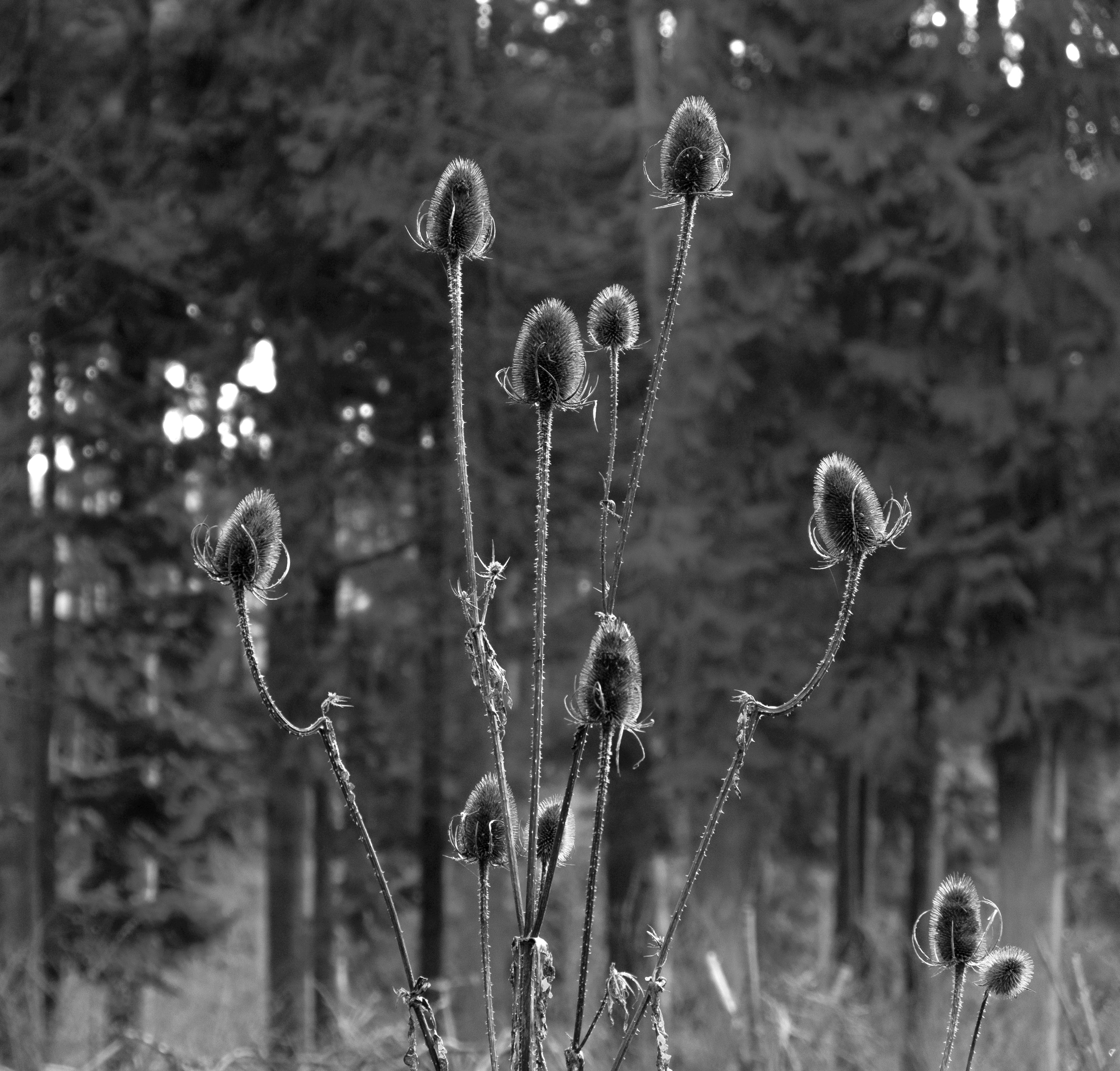
 teasel